The Real Cost of Cheap Hardware: Why 'Value' Materials Save You More in Rework
You've seen them. Those rock-bottom prices on fasteners, brackets, and hardware that make your wallet happy at checkout.
But three weeks into the job? Not so happy.
Stripped screws. Bent brackets. Callbacks from angry clients. Your crew redoing work that should've been done once.
That "deal" just cost you real money.
The Rework Tax Nobody Talks About
Here's what the numbers actually show: rework adds 20-50% to total project costs. In extreme cases? Try 200% of the original cost.
The American Society for Quality puts the average manufacturing rework expense at 12.5% of product sales. For construction projects, that translates to serious margin erosion.
Think about it. You saved $47 on a box of cheap deck screws. Then spent $600 in labor replacing a section when half of them stripped out during installation.
That's not savings. That's expensive lesson-learning.
Where Ultra-Cheap Hardware Fails You
Fasteners That Don't Hold
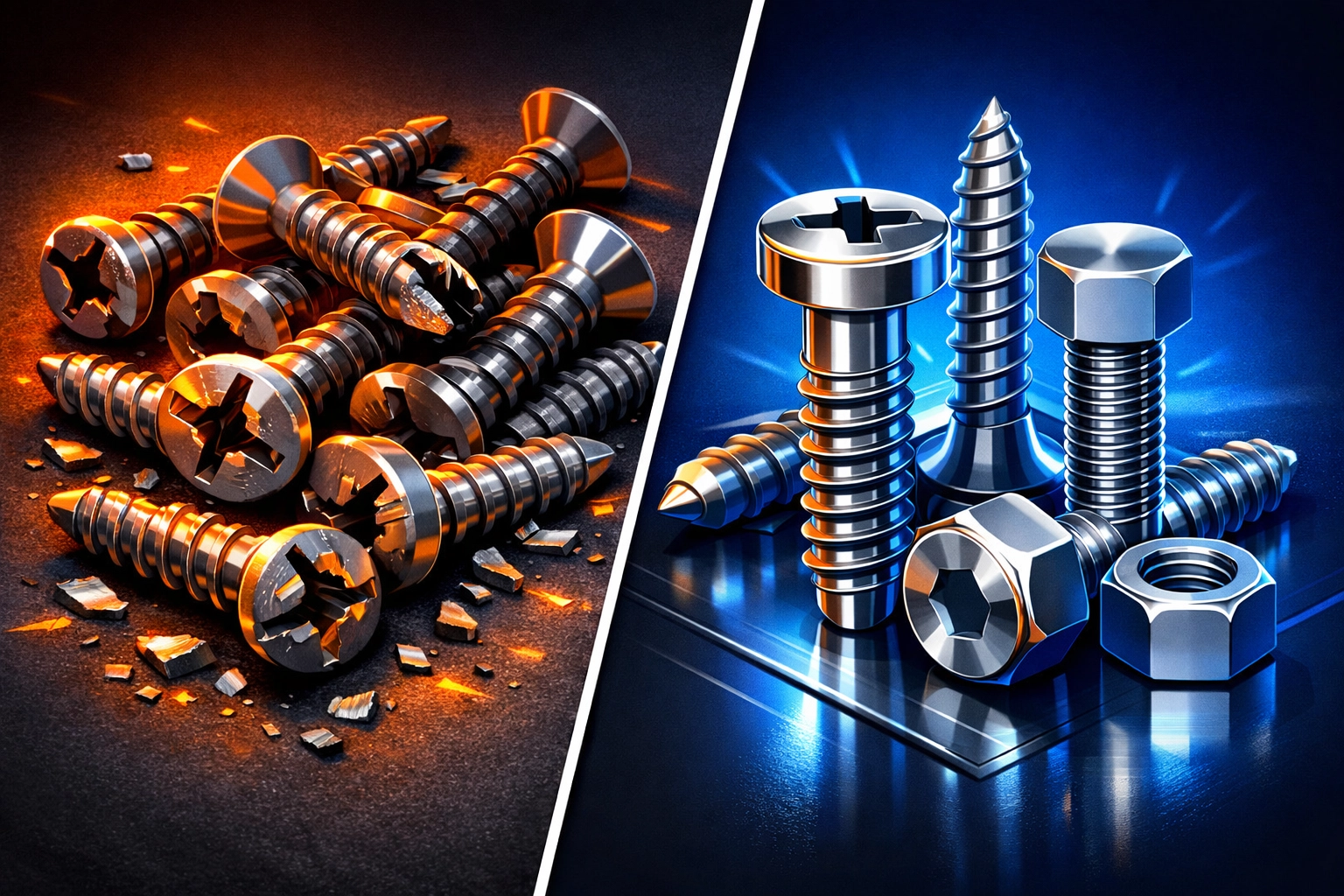
Budget fasteners use inferior steel alloys. They strip easier. They snap under load. They corrode faster in outdoor applications.
One failed anchor bolt on a deck railing? You're not just replacing hardware. You're explaining to a homeowner why their new deck isn't safe. You're scheduling another site visit. You're eating the labor cost.
Hardware That Bends Under Pressure
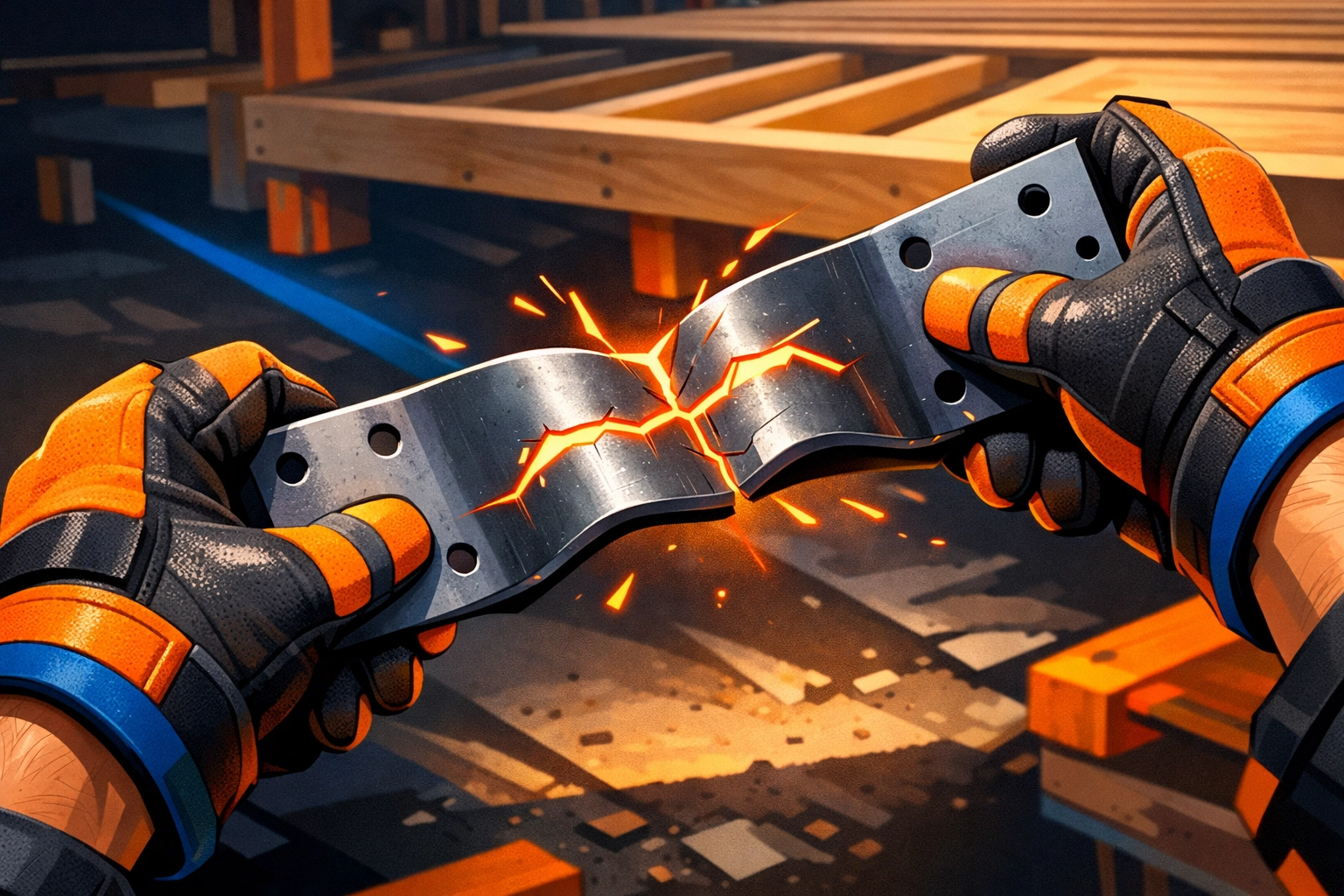
Cheap brackets, hinges, and structural connectors often use thinner gauge metal. They meet the bare minimum spec: until real-world conditions hit.
Temperature swings. Load stress. Normal use over time.
Budget hardware fails when it matters most. After you've already been paid and moved on to the next job.
The Coating That Disappears
Those "zinc-coated" screws at half the price? The coating is thinner. It wears off faster. Rust shows up in months instead of years.
Now you're dealing with staining on expensive siding. Or structural concerns because hidden fasteners are corroding.
The callback costs more than the original installation.
The Hidden Costs That Kill Your Bottom Line
Cheap materials don't just fail. They create cascading problems that drain profit from every angle.
Labor Multiplies the Pain
Let's say you buy 100 drawer slides at $3.50 each instead of $7 quality slides. You saved $350 upfront.
But 25% of them bind or fail within the first year. At $60 per callback to replace and reinstall, that's $1,500 in rework.
Your "$350 savings" just cost you $1,150 in losses. Plus the headache of unhappy clients.
Labor is where the real expense hides. Your crew isn't just replacing parts. They're traveling to the site. Setting up. Matching finishes. Cleaning up. Coordinating schedules.
A $4 failed part becomes a $75 service call.
Schedule Delays Cost Everyone
Cheap materials fail on their own timeline: not yours.
When a batch of substandard plumbing fittings starts leaking two weeks before final inspection, your schedule collapses. The next trade can't start. The client pushes back move-in. Your crew sits idle or gets pulled to another job, creating scheduling chaos.
Production delays cost more than labor hours. They cost momentum, client trust, and future referrals.
Your Reputation Takes the Hit
Here's the truth contractors learn the hard way: clients don't remember that you used "budget-friendly materials to save them money."
They remember that their deck screws are rusting. Their cabinet hardware feels cheap. Their fixtures failed.
You become known as the contractor who cuts corners. That reputation costs you the high-margin projects where quality clients are willing to pay for quality work.
What "Value" Materials Actually Mean
Value isn't about buying the most expensive option. It's about buying materials that perform reliably for their intended use.
Value materials hit the sweet spot:
Priced competitively (not premium, not bottom-barrel)Manufactured to consistent specificationsProven durability in real-world conditionsBacked by suppliers who stand behind their productsWhen you buy construction materials online from a verified construction materials marketplace, you get access to that middle ground. Quality materials at competitive prices: without the markup of traditional supply houses.
The Smart Contractor's Sourcing Strategy
The best operators don't choose between price and quality. They find both.
Compare Before You Commit
Single-supplier relationships lock you into whatever price and quality they're offering that week. Maybe it's great. Maybe it's "take it or leave it."
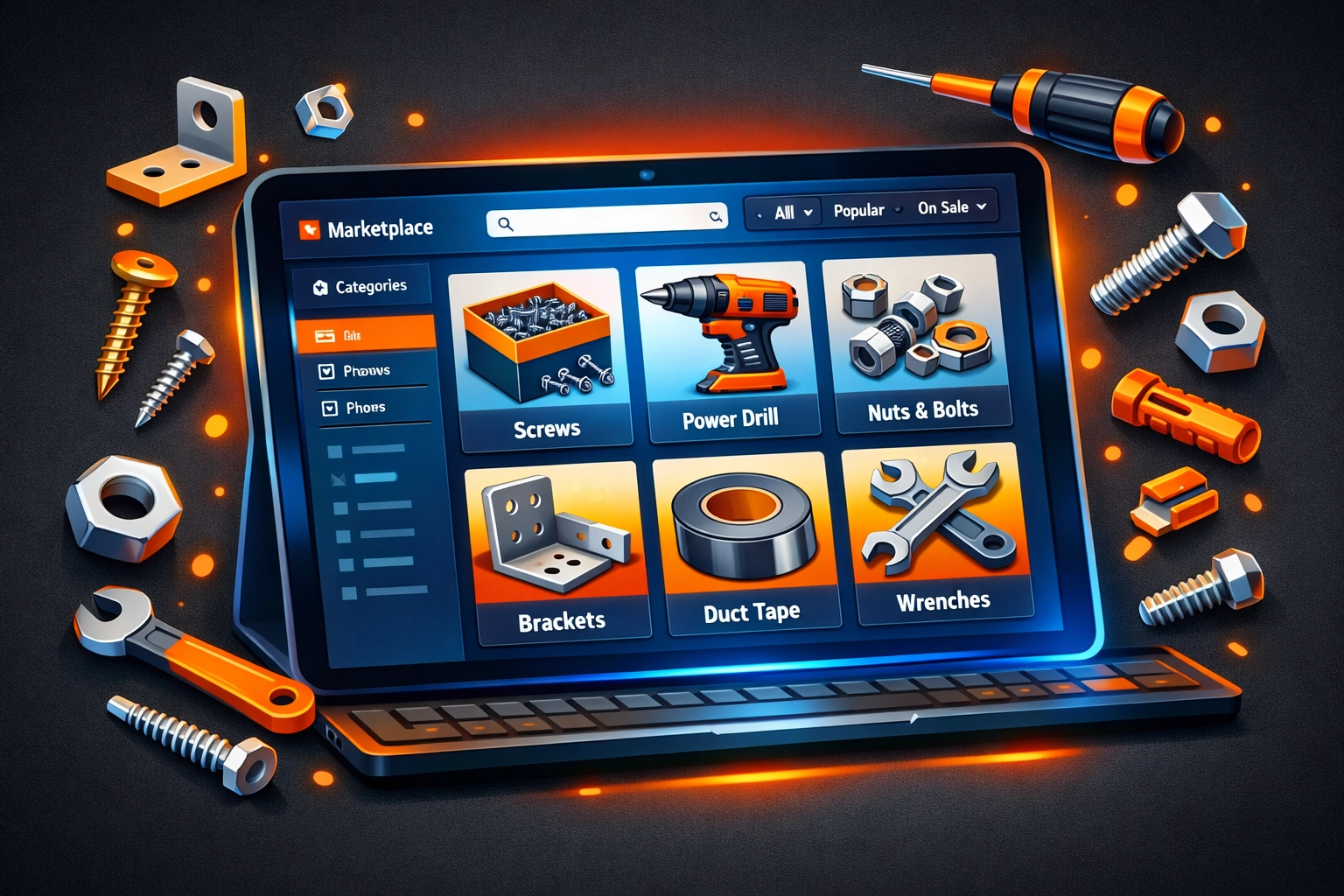
A contractor supply marketplace lets you compare options across multiple verified vendors. Same product category. Different price points. Actual competition driving better deals.
You're not gambling on unknown sellers. You're choosing from vetted suppliers competing for your business.
Look at Total Cost, Not Just Unit Price
That $0.12 fastener might look cheaper than the $0.19 option. But if failure rates are 3x higher, you're paying more in the long run.
Smart sourcing means calculating:
Material costExpected failure/return rateLabor for installation AND reworkShipping costsTime spent sourcing and orderingWhen you factor everything in, "expensive" materials often cost less per completed project.
How Construction Store Changes the Math
This is where a modern construction materials marketplace makes financial sense.
Competitive Pricing on Quality Materials
Construction Store brings together verified vendors competing for your order. That competition drives prices down: up to 60% off retail on many items: while maintaining quality standards.
You're not choosing between cheap or expensive. You're accessing contractor-grade materials at prices that used to require massive bulk orders.
Free Shipping Over $1,000
Shipping costs destroy "deals" on cheap materials. You saved $40 on hardware, then paid $65 to get it delivered.
With free shipping on orders over $1,000, you're stacking legitimate savings. Order what you need for the whole project. Get it delivered. No surprise costs.
One Platform, Multiple Vendors
Instead of jumping between five different supplier websites, calling for quotes, and tracking orders across multiple systems, you source everything in one place.
Time is money. The hours you spend chasing down the "best price" on cheap materials? That's labor cost you're not billing.
Construction Store streamlines the whole process. Compare prices. Order from multiple vendors. Track everything from one dashboard.
Verified Quality
Here's the difference between a marketplace and just "buying online": vendor verification.
Construction Store vets suppliers and products. You're not rolling the dice on unknown brands. You're buying from established manufacturers and distributors who meet quality standards.
That peace of mind has value. It means fewer surprises. Fewer failures. Fewer callbacks.
The Bottom Line on Materials and Rework
Cheap hardware creates expensive problems.
Rework doesn't just cost materials. It costs labor, time, reputation, and future business. The research is clear: those costs add 20-50% to project expenses when they hit.
Value materials: the ones priced right and built to perform: eliminate most of that risk. You install once. It works. You move on to the next job.
And when you source through a
construction materials marketplace like
Construction Store, you're not sacrificing savings to get quality. You're getting competitive pricing on verified materials, shipped free on larger orders, all from one convenient platform.
That's not choosing between price and value. That's getting both.
Next time you're tempted by that unbelievably cheap hardware deal, run the math. Factor in rework risk. Calculate your true cost.
Then head to
Construction Store and find the sweet spot: quality materials at prices that actually save you money where it counts( on the final invoice.)